Industry takes root
The Charlotte Trouser Company establishes its factory in Dilworth. The older building at the back of the complex belongs to this chapter of the neighborhood’s manufacturing history.
Source: Dilworth National Register inventory ↗Before the meetings, the ideas and the businesses taking shape at Tabbris, this address was part of Charlotte’s industrial story.
Follow the people, the work and the buildings that came before us.
Explore the history ↓
A factory complex. A changing neighborhood. A new generation of people at work.
The former Lance plant fronts South Boulevard. The older Charlotte Trouser Company factory stands at the rear, at 310 Arlington Avenue. They are connected chapters, not the same building. Tabbris occupies part of the complex, rather than the entire property.The Charlotte Trouser Company establishes its factory in Dilworth. The older building at the back of the complex belongs to this chapter of the neighborhood’s manufacturing history.
Source: Dilworth National Register inventory ↗Philip Lance begins selling roasted peanuts. The business grows, moves to College Street and develops the peanut-butter cracker that becomes central to the Lance story. This origin predates the company’s move to South Boulevard.
Source: Charlotte Mecklenburg Library ↗Lance establishes its operation at this address. The Library describes occupation of an existing warehouse; historian Tom Hanchett’s History South dates construction of the front building’s left-hand portion to 1926. Both accounts point to this year as a turning point for the site.
Sources: History South and Charlotte Mecklenburg Library ↗According to History South, Lance doubles the front building in 1941. The expanding complex becomes a visible part of the company’s South Boulevard presence.
Source: History South ↗The company leaves for a larger site farther down South Boulevard. The buildings remain, ready for another chapter.
Source: History South ↗In the late 1990s, the complex is converted into Factory South lofts. Its industrial architecture becomes the setting for new ways of living and working.
Source: Charlotte Magazine ↗Tabbris opens here in October 2019. Today, the space brings businesses and people together within a place that has already held generations of work.
Source: Mecklenburg Times ↗
Tabbris today · South Boulevard

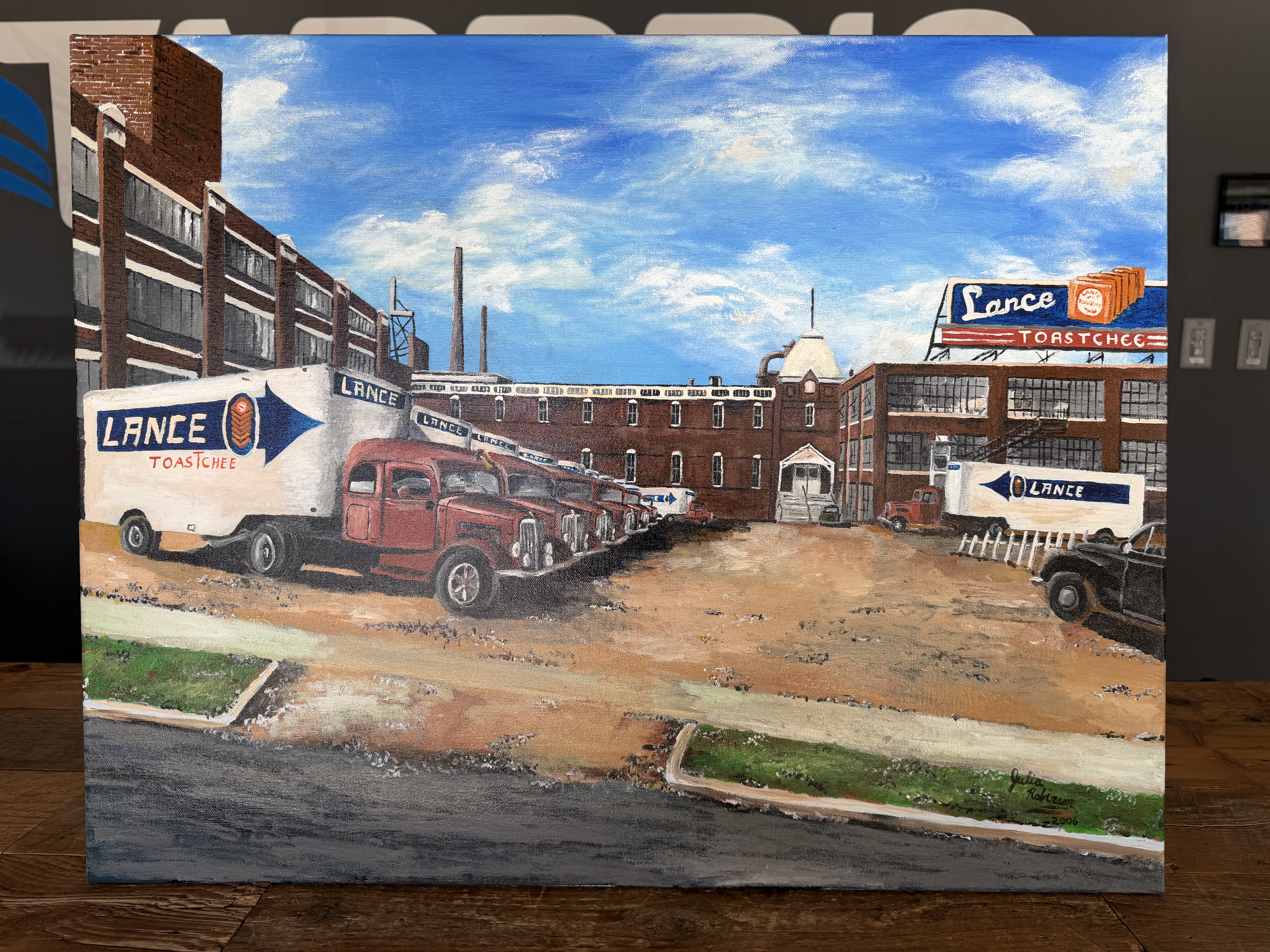
Julia Robertson’s interpretation of the historical view. A painting, not a color photograph of the period.
A place, seen again
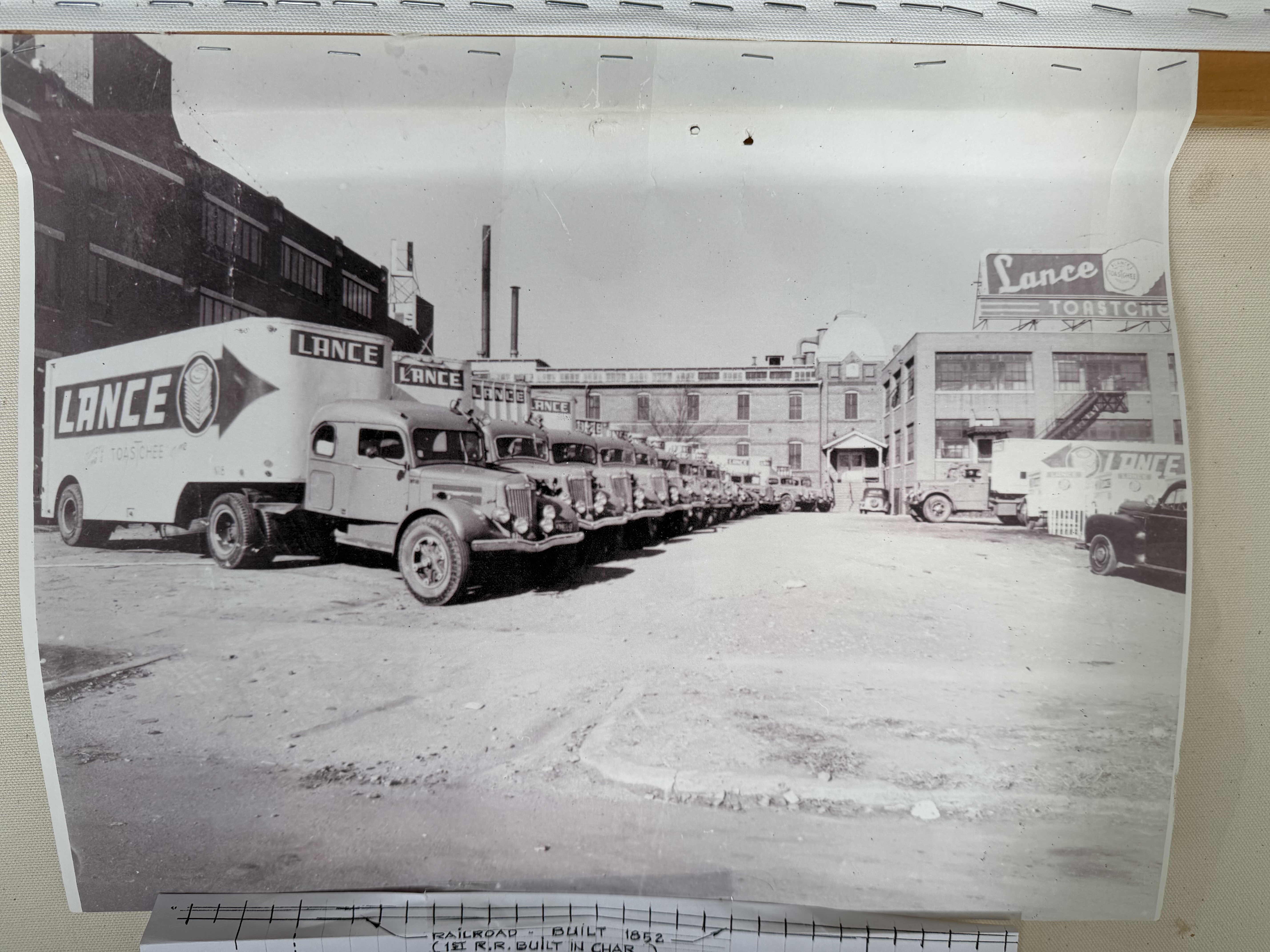
The photograph and the painting offer two ways to look at the same place: an archival view, and an artist’s interpretation decades later.
Both make the scale of the factory and the life of its courtyard easier to imagine.
Reading the site
Gary McCracken’s hand-drawn plan records his understanding of the buildings and additions. It is a useful companion to the photograph, showing how the courtyard sits between the structures.
This is Gary’s interpretive map, dated February 10, 2006, and marked “no scale.” Some dates differ from published histories. They are not adopted as verified dates in the timeline above.
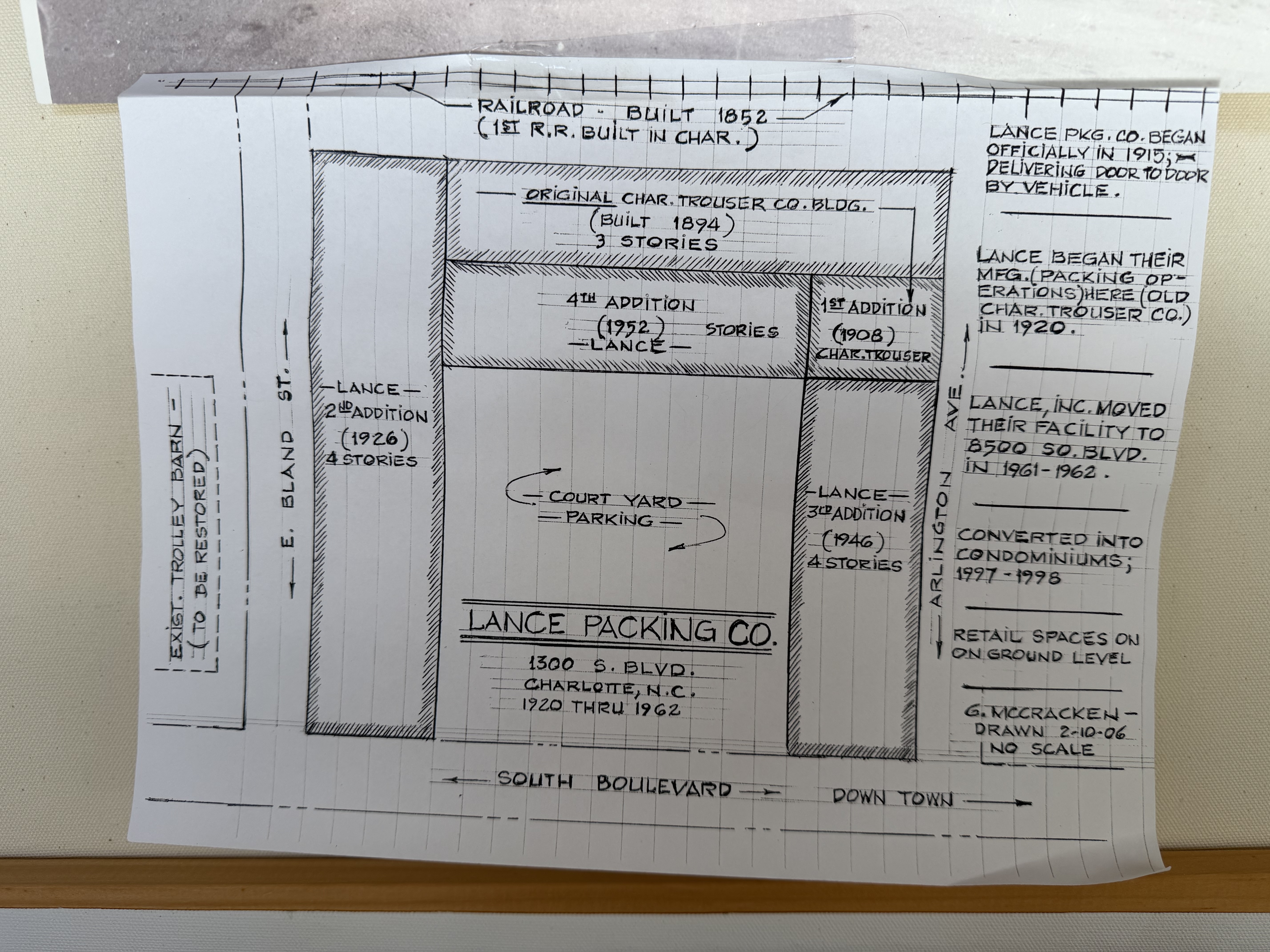
G. McCracken, site notes, 2006.
Explore historical photographs and learn more about the Lance years in these collections.
A museum listing identifies a view of the Lance fleet from the 1940s–1950s.
View museum photograph ↗The Library’s illustrated history draws on the Robinson-Spangler Carolina Room.
Explore the Library collection ↗
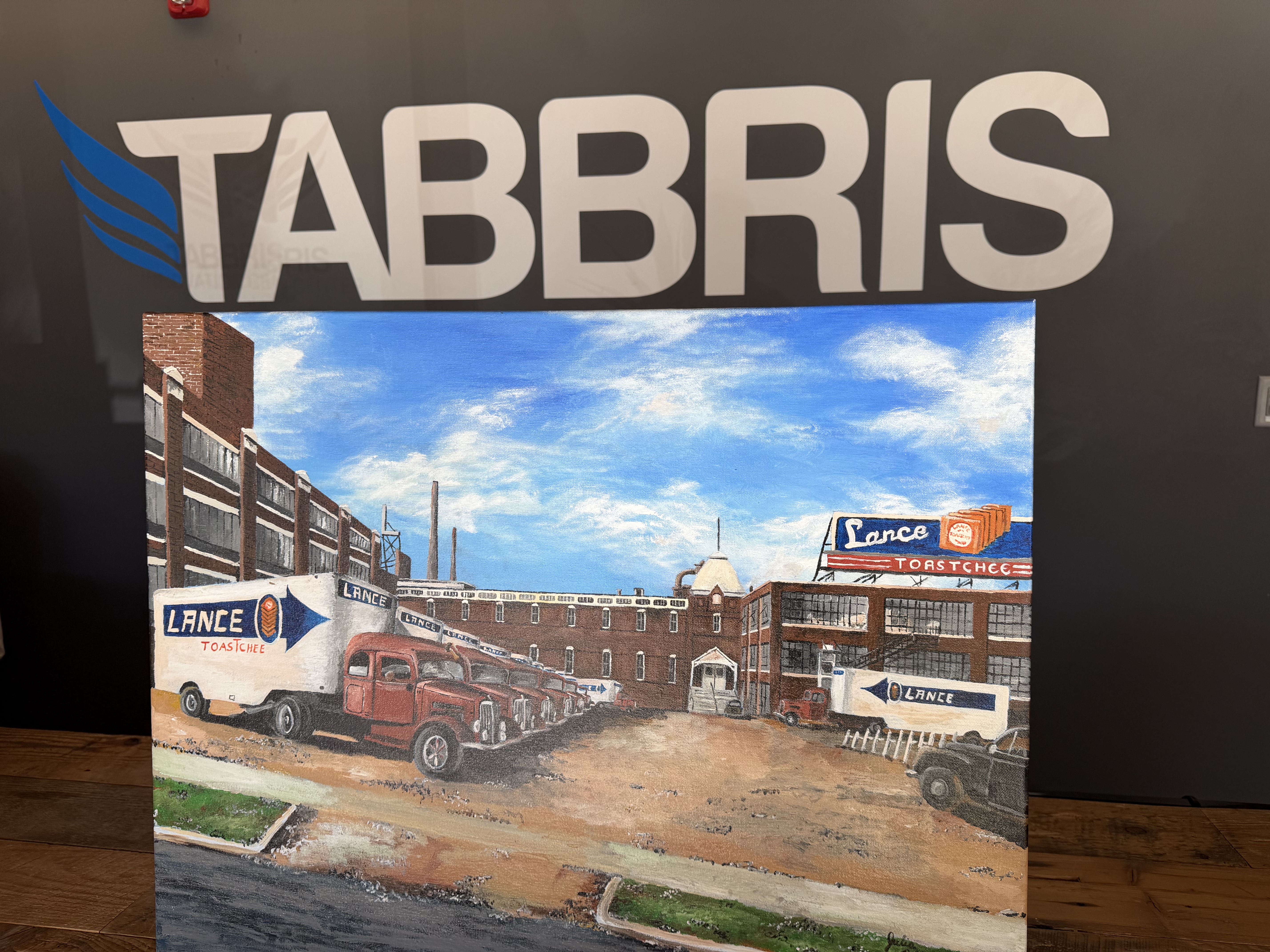
The painting photographed at Tabbris.
An artwork with a local connection
Gary McCracken says his grandmother worked at the plant. In 2006, he commissioned Julia Robertson to interpret a black-and-white photograph of the complex. According to his account, Robertson researched the colors for the painting.
Julia Robertson · Oil · 28 × 21¾ in. Commissioned and painted in 2006. Title unknown.